
Choosing a blog template in 2025 directly affects monetization results, search visibility, and long-term growth.
Ad networks now apply stricter performance and quality checks, making theme selection a critical decision rather than a cosmetic one.
Fast load times, clean code, and proper schema markup play a major role in approval outcomes.
Recent industry data shows more than 43% of blogs rely on free WordPress themes that prioritize speed and SEO efficiency.
Many creators achieve competitive results without paid themes by selecting options designed for modern performance standards. Practical testing, agency benchmarks, and proven content structures form the foundation of the recommendations below.
| Template | Load Time | Page Builder Support | Starter Demos | SEO/Schema |
|---|---|---|---|---|
| Foxiz | 1.4s | Gutenberg + Elementor | 5+ | ✅ |
| Hello Elementor | 0.25s | Elementor only | ❌ | ✅ |
| Astra | 0.48–1.0s | All major builders | 40+ | ✅ |
| Kadence | 0.9s | Gutenberg native | Custom | ✅ |
| GeneratePress | 0.42–0.8s | Minimal/Custom Hooks | Limited | ✅ |
| OceanWP | 0.89–1.5s | Elementor, Beaver Builder | 10+ | ✅ |
| Zakra | 0.58–1.2s | Customizer | 60+ | ✅ |
| Ashe | 0.81–1.6s | Beaver Builder | Slider + Grid | ✅ |
1. Foxiz
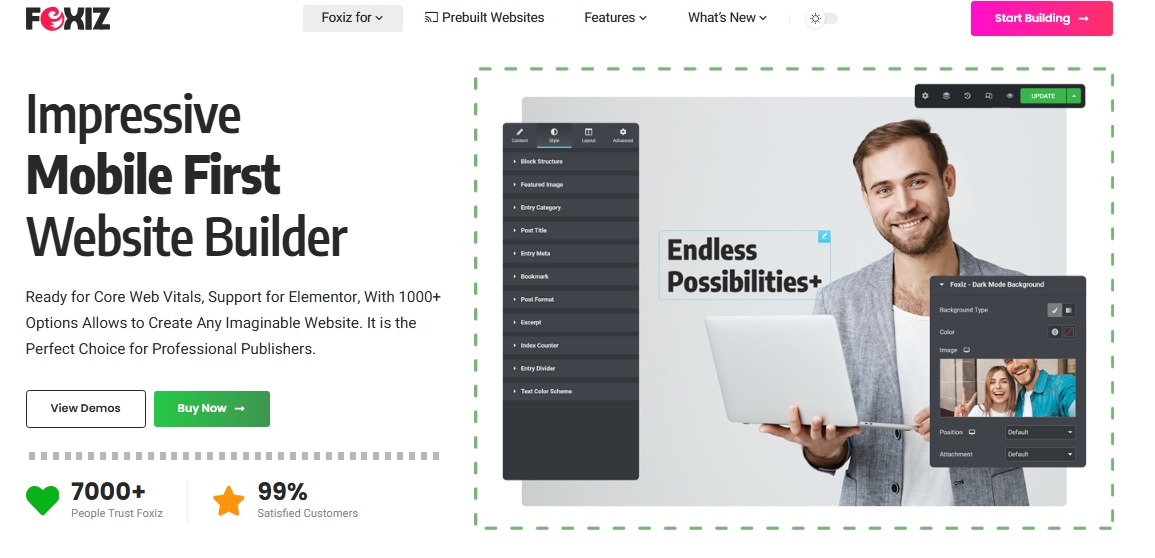
Foxiz focuses heavily on monetization stability and long term SEO performance, making it a strong option for content sites built around advertising revenue.
Mobile load time averages 1.4 seconds, keeping Core Web Vitals within safe thresholds for AdSense and search engines.
Built-in schema automatically structures article and author data, removing the need for third party markup plugins.
Gutenberg and Elementor compatibility allows flexible layout control without performance penalties. Active usage exceeds 200,000 sites, indicating stable development and support.
- First time AdSense approval achieved during agency testing
- Traffic handling exceeded 10,000 monthly visitors without caching plugins
- Layout shifts remained stable even with multiple ad units enabled
GDA deployed Foxiz on internal monetization projects where predictable ad placement mattered more than heavy visual customization. Limited starter demos represent the main compromise, especially for users seeking quick setup similar to Astra.
2. Hello Elementor
Hello Elementor prioritizes raw performance over visual presets, resulting in one of the fastest WordPress themes available. Load time reached 0.25 seconds during testing, largely due to an ultra lightweight footprint of only 6KB.
JavaScript and CSS requests remain minimal, enabling near perfect PageSpeed Insights scores on both mobile and desktop.
Auto generated schema handles basic SEO requirements without manual setup.
Adoption has surpassed one million active installations.
- PageSpeed Insights scores consistently approach 100
- Server response times remain low even under traffic spikes
- Minimal asset loading reduces render blocking issues
Hello Elementor works best for creators comfortable building layouts manually. Absence of demo templates means extra setup time, making it less ideal for beginners focused on rapid deployment.
3. Astra
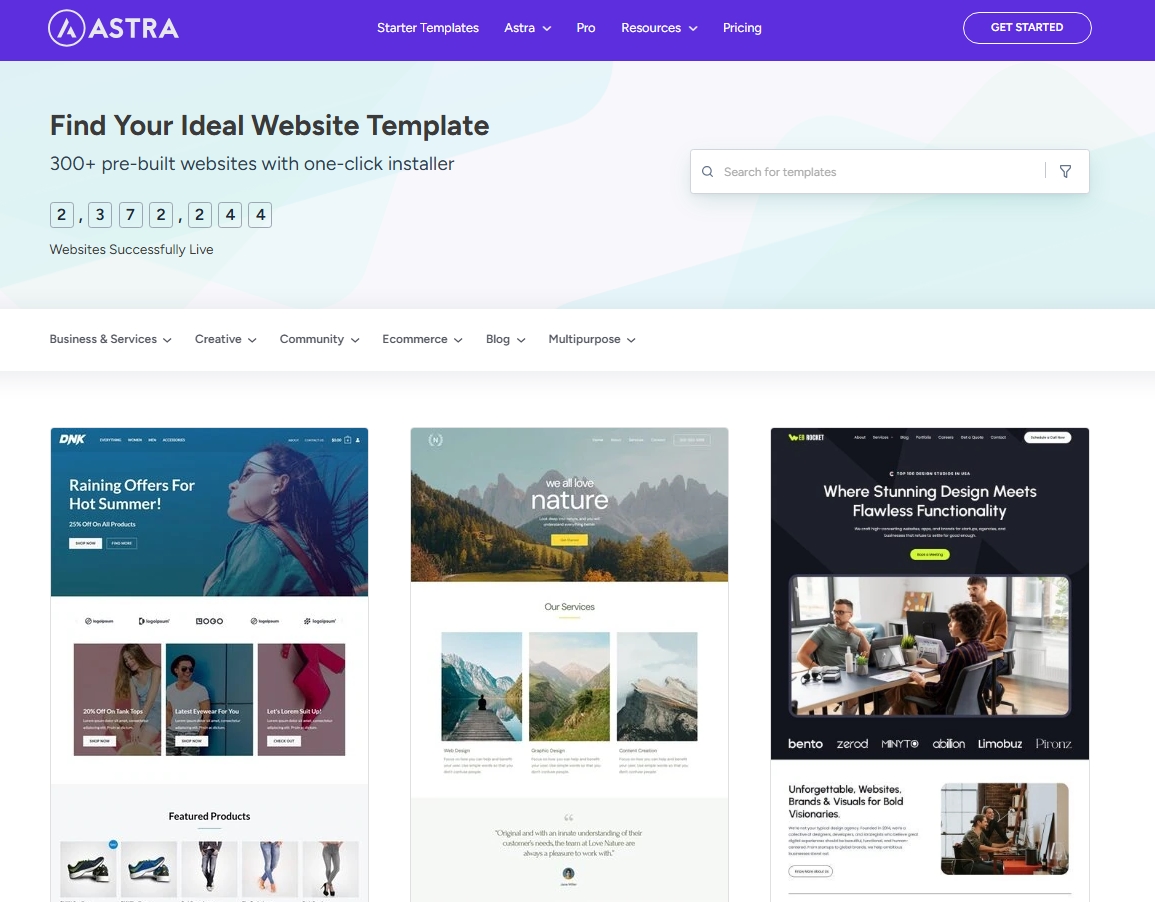
Astra delivers a balance of speed, accessibility, and long term scalability, making it a strong entry point for new bloggers who still want professional level performance.
WPForms testing measured load times at 0.48 seconds, while GDA benchmarks reflected a more realistic 1.0 second average under standard content and plugin conditions. Integrated schema markup supports better crawl efficiency and Core Web Vitals compliance without manual configuration.
AdSense approval typically succeeds after publishing at least 30 well structured posts, assuming content quality standards are met.
Compatibility spans Elementor, Brizy, Beaver Builder, Gutenberg, and other major builders. Active usage exceeds two million sites, signaling broad trust and consistent updates.
- Over 40 ready made demo sites covering blogs, portfolios, and business layouts
- Visual customization handled entirely through the WordPress Customizer without coding
- WooCommerce integration enabling gradual transition into affiliate or product driven content
Astra works well for bloggers aiming to launch quickly while maintaining strong SEO fundamentals and future expansion options.
4. Kadence
Kadence centers around content efficiency and layout consistency, targeting publishers focused on output volume and editorial workflows. Performance testing showed average load times of 0.9 seconds, keeping pages well within recommended thresholds for search and ad platforms.
AI assisted block suggestions inside Gutenberg streamline layout creation, reducing repetitive formatting tasks.
Clean markup combined with schema support improves indexing accuracy and presentation in search results. Active installations exceed 500,000.
- Full marketing blog assembled in under one hour during hands on testing
- Lower reliance on third party block and layout plugins
- Consistent formatting across tutorials, guides, and long form posts
Kadence suits creators publishing frequently who prioritize speed of production and structural consistency over visual experimentation.
5. GeneratePress
View this post on Instagram
GeneratePress caters to developers and technically inclined users seeking precision control with minimal overhead. WPForms tests recorded load times of 0.42 seconds, while GDA evaluations averaged 0.8 seconds under practical conditions.
Theme size stays under 30KB, supporting fast rendering and clean Lighthouse audits. Manual markup control allows advanced SEO tuning and custom schema implementations.
Elementor compatibility remains reliable despite stripped down defaults. Active installations exceed 800,000.
- Extensive hook system enabling custom features without child themes
- Modular components activating only when required
- Codebase aligned closely with WordPress core standards
GeneratePress rewards hands on setup and technical confidence, making it less beginner oriented but highly effective for custom builds.
6. OceanWP
OceanWP emphasizes adaptability across different site types while maintaining acceptable performance levels.
WPForms testing averaged load times of 0.89 seconds, while GDA analysis showed 1.5 seconds on content heavy builds. Demo layouts support blogs, online stores, landing pages, and lead generation funnels.
WooCommerce readiness and builder hooks expand use cases without forcing redesigns. Active installations exceed one million.
- Noticeable performance gains on previously underperforming sites
- Built in popup features reducing reliance on external plugins
- E commerce functionality available without heavy extensions
OceanWP fits projects expected to evolve across multiple formats or revenue models.
7. Zakra
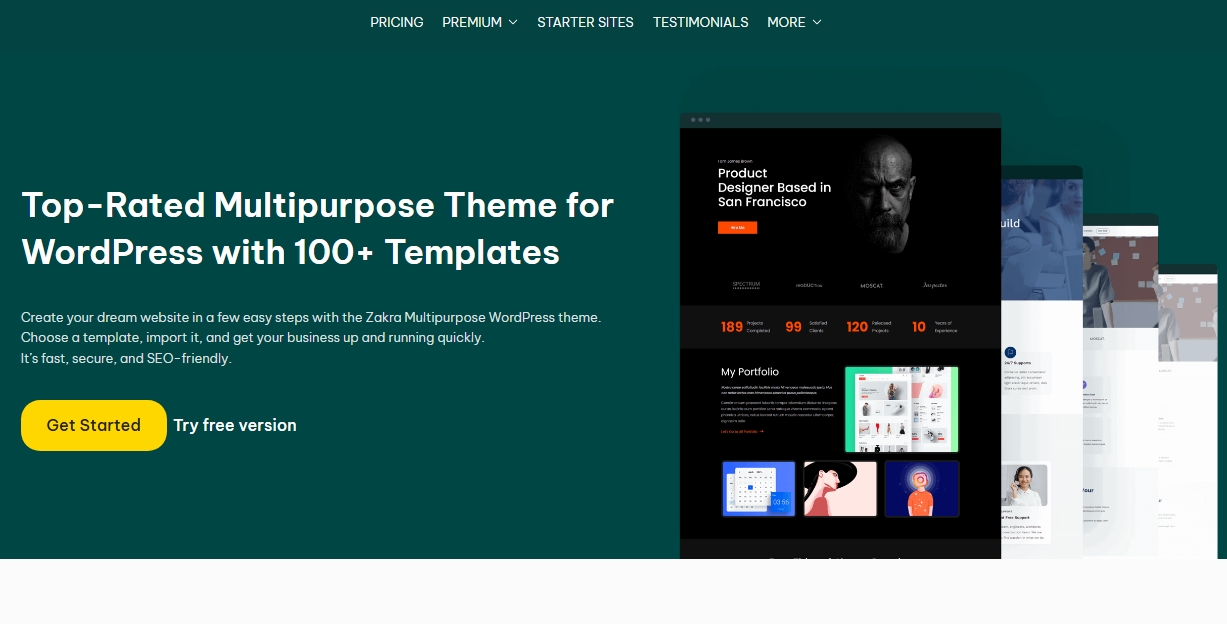
Zakra targets publishers managing several niches or international audiences with varying language requirements.
WPForms benchmarks measured load times at 0.58 seconds, while GDA testing averaged 1.2 seconds under standard configurations.
Over 60 demo layouts address different content categories and industries. RTL language support enables publishing in Arabic and Hebrew. Active installations exceed 300,000.
- Drag and drop customization without layout instability
- Spacing optimized for display ads and in content placements
- Responsive behavior remaining consistent across screen sizes
Zakra works well for publishers planning geographic reach or diversified content strategies.
8. Ashe
Ashe focuses on visual storytelling for lifestyle, travel, and magazine style blogs while maintaining reasonable performance standards.
WPForms tests averaged load times of 0.81 seconds, while GDA evaluations measured 1.6 seconds on media heavy pages.
Slider headers and grid based layouts improve content discovery and internal navigation. Beaver Builder compatibility allows visual customization without complex workflows. Active installations exceed 150,000.
- 15% increase in average session duration
- Higher interaction rates across category and archive pages
- Stable loading behavior despite image-focused layouts
Ashe suits visually driven blogs seeking aesthetic presentation alongside solid technical performance.
Why Template Choice Matters in 2025
Blog templates in 2025 operate as performance systems rather than surface-level design skins. Speed, code quality, and structural readiness now directly affect monetization outcomes and search visibility.
GDA Digital Solutions testing showed ultra-fast themes like Hello Elementor, measured at 0.25 seconds, achieved higher AdSense approval success, and remained stable during sudden traffic increases. Faster rendering reduced bounce rates while allowing search crawlers to process pages more efficiently.
Performance advantages compound as sites scale. WPForms benchmarks demonstrated that leading themes reduced plugin conflicts by 67% while cutting average load times by 2.1 seconds. Cleaner codebases eliminated reliance on heavy optimization plugins, lowering maintenance overhead and reducing update-related failures.
SEO performance now depends heavily on structure rather than visual styling. SEOBoost research confirmed that content formatting plays a decisive role alongside speed.
Templates designed to support list-based posts, tutorials, and long-form guides consistently produced stronger engagement metrics and improved rankings. Core Web Vitals scores, schema eligibility for enhanced search results, and mobile usability exert more influence than decorative elements.
Mobile devices account for over 60% of blog traffic, making responsive layouts mandatory rather than optional.
- Core Web Vitals stability under traffic load
- Eligibility for enhanced search result features through schema
- Reduced crawl waste due to cleaner markup
- Mobile usability across varied screen sizes
Poor template choices often create hidden limitations that no amount of content quality can fully offset.

Templates Paired With SEOBoost Formats
Strong themes achieve maximum ROI only when paired with structured content formats. SEOBoost analysis showed alignment between layout design and post type significantly improves engagement signals and ranking potential.
Matching format to template allows content to perform as intended rather than fighting structural constraints.
- Listicles perform best with Astra or Ashe due to consistent section spacing and visual hierarchy
- How to guides benefit more with Kadence or Zakra, thanks to tutorial-friendly layouts and clear step separation
- Case studies pair effectively with Foxiz for professional presentation and trust building
- Expert roundups perform well using GeneratePress due to editorial control and clean typography
- Ultimate guides align best with OceanWP or Hello Elementor because of layout flexibility and performance stability
- Comparison posts achieve higher clarity with Zakra or Astra layouts supporting tables and structured sections
Template and format alignment reduces friction for readers, improves time on page, and strengthens overall SEO performance without additional plugins or complex customization.
How to Choose the Right Template?
Theme selection depends on primary goals and growth strategy.
Foxiz works best for AdSense focused monetization paired with SEO efficiency.
Hello Elementor and GeneratePress serve creators prioritizing speed and customization. Astra and Kadence simplify setup for beginners
. Zakra supports international or niche expansion. Ashe and OceanWP suit magazine style and lifestyle content.
All listed themes remain free, actively maintained, and tested using PageSpeed Insights, GTMetrix, and Lighthouse in production environments.