The concrete truth is simple: a blog post will not rank in 2025 unless it is intentionally optimized for search intent, structured with clean metadata, supported by internal links, and technically built to satisfy Core Web Vitals.
Search engines have shifted far beyond keyword matching. They now evaluate how well your post actually solves the user’s problem, how easy the content is to read, how fast the page loads, and whether your site demonstrates expertise and trustworthiness.
A modern SEO-optimized blog post in 2025 must combine three layers:
- Topical Relevance (your content answers the exact search query)
- Technical Precision (metadata, structure, schema, load speed)
- User Experience (clarity, readability, visuals, internal linking).
1. Keyword Strategy: The Foundation of Every Strong Blog Post
Every successful blog post begins long before you write the first sentence. The research phase defines the direction and depth of your content.
In 2025, keyword strategy is no longer about chasing the highest search volume. It is about matching real user intent. That means first identifying what the searcher expects to see, then structuring your article to deliver exactly that.
When choosing your primary keyword, the goal is to find a phrase with clear relevance to your topic and measurable demand, but without extreme competition. Long-tail keywords remain powerful because they naturally align with deeper user intent and convert better in organic search.
Alongside the main keyword, research semantic variations. Google uses NLP to evaluate topic coverage, so covering related themes strengthens your authority.
A blog post that ranks is not just “optimized.” It is strategically aligned with how people search and why they search.
| SEO Element | What You Must Do | Why It Matters in 2025 |
| Primary Keyword | Choose one main keyword based on intent | Ensures relevance and clarity |
| Long-tail Variations | Add 3–6 natural variations | Improves topical depth |
| Semantic Keywords | Use synonyms + related concepts | Helps Google validate coverage |
| Competitor Analysis | Review the top 5 ranking pages | Shows depth, structure, and expectations |
| Search Intent | Match informational vs. commercial intent | Prevents misalignment penalties |
2. Title Tag and URL Structure
View this post on Instagram
A strong title tag remains one of the most important ranking signals. The 2025 rule is simple: clarity beats creativity. A title should instantly tell both search engines and readers what the page delivers.
Place the primary keyword near the beginning, but avoid robotic phrasing. Your title should still feel natural and clickable.
The URL must be short, readable, and clean. URLs that contain unnecessary numbers, parameters, or filler words dilute SEO value and reduce CTR. A well-formed URL helps crawlers understand the page’s purpose immediately.
Ideal Title & URL Format
| Component | Best Practice | Example |
| Title Tag | Keyword near the beginning, under 60–70 characters | “On-Page SEO Checklist 2025: Full Guide for Bloggers” |
| URL | Short, clean, lowercase, hyphens only | /on-page-seo-checklist-2025 |
| H1 | Matches search intent, can be slightly longer than the title | “On-Page SEO Checklist 2025 for Every Blog Post” |
3. Meta Description That Boosts CTR
Even though meta descriptions do not directly influence rankings, they heavily influence CTR, which does influence your position.
A modern meta description must read like a promise: it should explain what the reader will gain and why your article is the one worth clicking.
Descriptions should remain between 150–165 characters. Avoid overstuffing keywords – Google rewrites meta descriptions that feel forced. Instead, write naturally, using the primary keyword once and focusing on clarity.
A strong meta description increases visibility because people choose your result over others.
4. Content Structure and Depth: The Real Ranking Engine

The depth of your content determines how long visitors stay and whether they feel the article truly answers their question. Search engines reward depth, originality, and clarity – not word count for its own sake.
A strong article uses one H1, multiple H2s, and natural H3s. The structure should reflect logical progression. Readers should understand each section without scanning endlessly.
Subheadings help break down complex topics while signaling content hierarchy to search engines.
The 2025 shift emphasizes topical completeness. Google now evaluates if your content covers everything a user would expect, based on the top results and semantic patterns.
5. Visual Elements: Images, Graphics, and Alt Text
@thewizardmarketing 6 ways to improve your SEO through image optimization #seo #seooptimization #marketing #seotips #websites #smallbiz #imageoptimization #cdn ♬ original sound – Jake | The Marketing Wizard
Images play a larger SEO role than most bloggers realize. They increase time-on-page, reduce bounce rates, and help explain complex concepts.
In 2025, with multimodal indexing expanding, alt text is even more important because AI-based search uses image signals to understand page context.
Image optimization includes:
- descriptive filenames
- alt text with natural phrasing
- compressed file sizes
- appropriate dimensions for speed
Visuals should support the content, not decorate it. A chart, flow diagram, or screenshot can anchor the reader’s understanding and strengthen your topical authority.
6. Internal and External Linking: Architecture That Google Understands
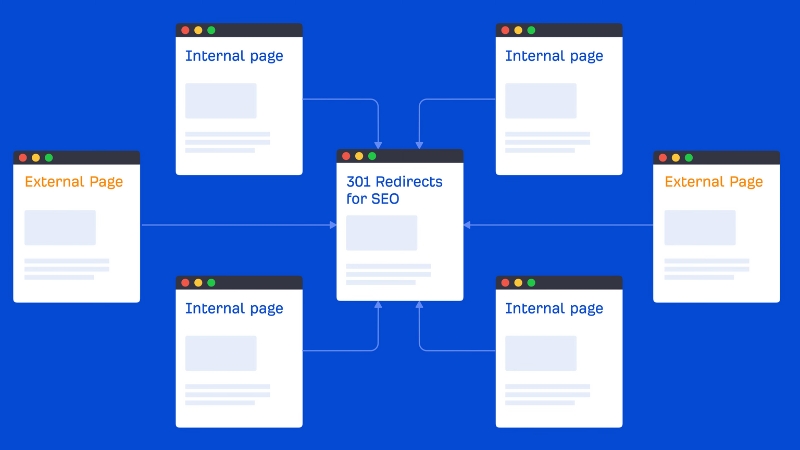
Internal linking is one of the strongest on-page SEO tools in 2025. It creates a clear map for search engines and distributes ranking power across your site. Link to related posts, cornerstone content, and supporting articles.
External links build trust. When you cite credible sources, search engines treat your content as more reliable. This is part of E-E-A-T: demonstrating expertise by connecting your claims to real data.
Internal linking also increases the number of pages a visitor views in one session, improving behavioral signals.
Linking Best Practices
| Link Type | Best Practice | Benefit |
| Internal Links | 3–10 per article, deep links | Better crawlability + topical relevance |
| External Links | Cite authoritative sources | Boosts trust + context |
| Anchor Text | Natural phrasing, not exact-match spam | Maintains readability + avoids penalties |
7. Technical SEO & Performance Requirements
Core Web Vitals: Are you chasing milliseconds or focusing on the user experience upgrades that really matter?
Share your approach! 👇
— Chrome for Developers (@ChromiumDev) September 15, 2024
Technical performance is a ranking factor. Core Web Vitals – LCP, CLS, INP – define whether your page loads quickly, remains stable, and responds smoothly.
A blog post must be optimized for:
- fast loading images
- lightweight scripts
- responsive mobile design
- clean HTML semantics
- HTTPS security
A slow site loses rankings even if the content is exceptional. In 2025, mobile-first indexing will dominate, so every blog layout must be designed for small screens first.
Using structured data (schema) improves the likelihood of rich results. Article schema, FAQ schema, and breadcrumb schema strengthen search visibility and improve CTR.
8. Content Length, Readability, and User Experience
Long-form content ranks because it answers questions fully, but length alone is meaningless. The focus must be clarity, consistency, and usefulness.
Use long paragraphs, but keep them readable. Avoid filler text. Maintain a natural story-like flow. Readers should sense they are learning from a human, not skimming through blocks of AI-generated noise.
Key focus areas for readability include:
- short opening sentences
- logical transitions
- real examples or comparisons
- tables placed strategically
- very light use of bullet points
A blog post with strong UX keeps readers engaged and signals value to search engines.
9. Updating and Maintaining Older Content
View this post on Instagram
In 2025, content freshness affects rankings more than ever. Outdated blog posts lose visibility quickly, especially if competitors publish newer versions.
A strong SEO system includes quarterly content audits:
- update stats
- fix broken links
- Replace old screenshots
- Add new internal links
- refine headings
- Re-optimize the title & meta description
Maintaining old posts is one of the easiest ways to climb SERPs without creating new content every day.
Content Update Checklist
| Task | Frequency | Purpose |
| Fix broken links | Monthly | Improves user experience |
| Update statistics | Quarterly | Maintains accuracy |
| Add new internal links | Monthly | Strengthens website structure |
| Re-optimize metadata | As needed | Improves CTR |
| Expand thin sections | As needed | Increases topical depth |
Conclusion
On-page SEO in 2025 is about clarity, structure, depth, and technical excellence. A single blog post must satisfy user intent, present the information cleanly, load fast, and demonstrate expertise.
Search engines reward posts that provide real value, connect logically to other content on the site, and remain updated over time.
If you consistently follow this checklist – keyword strategy, metadata precision, structured content, optimized images, internal linking, technical speed, and ongoing updates – every post you publish becomes a long-term SEO asset rather than a one-time article.