Sitemap Guide 2025 for Blog Websites – Generate, Submit, Troubleshoot Fast

Illustration of a website sitemap with connected pages and SEO elements

In 2025, fast indexing depends on more than publishing new posts. Structure, clarity, and direct communication with search engines decide how quickly pages appear in results. Sitemaps work as clear roadmaps for bots and users, showing page priority, relationships, and crawl paths. Proper sitemap use reduces indexing delays, prevents missed URLs, and improves crawl efficiency. … Read more


Customize Any Blog Website Template Without Killing Page Speed or Rankings

Short alt text: Desktop computer displaying a website dashboard with charts and analytics

Customizing or redesigning a blog template often supports stronger branding, improved user experience, and higher monetization potential. Visual upgrades, layout adjustments, and feature additions help align a blog with business goals and audience expectations. Poor execution introduces serious SEO damage and measurable performance declines that are difficult to reverse. Structural changes influence multiple technical signals … Read more

Defer Third Party Scripts Safely While Keeping Ads and Analytics Working

Testing and Monitoring Performance

Modern websites rely heavily on third-party scripts to support advertising, analytics, personalization, and user engagement. Performance problems emerge when those scripts load too early or execute without prioritization. Goal focuses on delaying non-critical third-party scripts while preserving revenue, tracking accuracy, and core functionality. Third-party Scripts represent the most expensive resource category during page load. Industry … Read more

Blog Websites vs WordPress Sites in 2025 – What Ranks Better and Why

In 2025, WordPress sites rank better than generic blog websites in the vast majority of competitive search results, not because WordPress is inherently “SEO magic,” but because its technical flexibility, performance control, and ecosystem make it easier to meet Google’s current ranking requirements at scale. Blog websites built on closed or simplified platforms can still … Read more

Best Sidebar and Widget Setup for Blog Websites That Keeps Speed High

Blog article page show a clean sidebar and widget setup with search, recent posts, and categories

The best sidebar and widget setup for a fast blog is minimal, conditional, and data-driven. High-performing blogs limit sidebars to essential elements, load widgets only where they add measurable value, avoid third-party scripts unless necessary, and prioritize Core Web Vitals over visual density. In practice, this means fewer widgets, context-aware placement, server-side rendering where possible, … Read more

Why a Blog Website Gets Slow After Adding Widgets and What to Remove

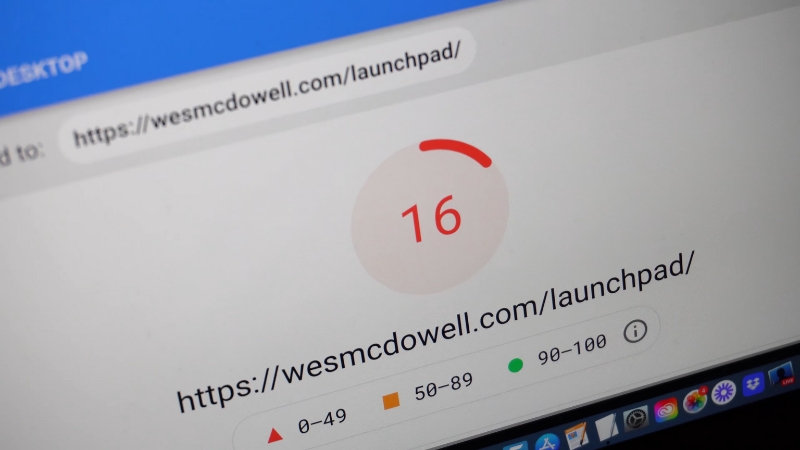
Blog website gets slow after adding widgets as a speed test score shows heavy load and poor performance

A blog website gets slow after adding widgets because most widgets load extra JavaScript, CSS files, fonts, tracking scripts, and external API calls that block rendering, increase total page weight, and delay browser execution. Each widget adds processing work for the browser and additional network requests, and when enough of them accumulate, page load time … Read more

Best Ad Placement for Blog Websites for Higher RPM Without Speed Loss

Ad placement visual that shows how Google Ads placement on a blog page connects clicks to revenue

The best ad placement for blog websites that increases RPM without causing speed loss relies on concentrating ads where user attention is already established, while keeping early-page rendering as clean as possible. Blogs that consistently achieve higher RPM without harming performance do so by limiting above-the-fold ads, prioritizing in-content placements after engagement begins, and controlling … Read more