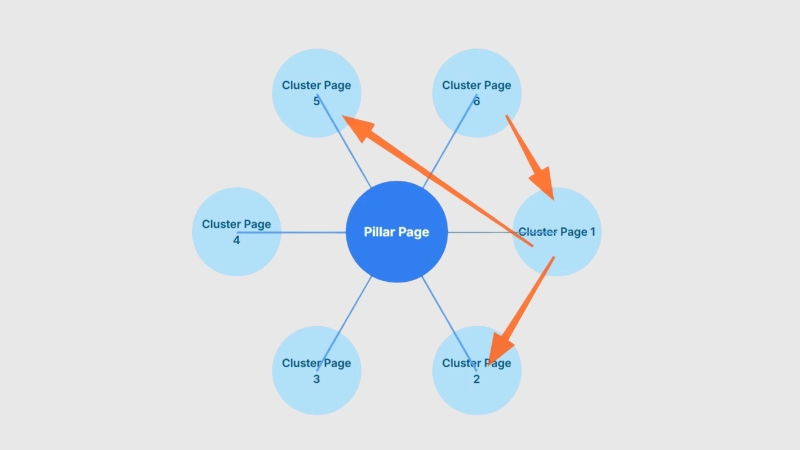
In 2025, blogging websites that consistently capture long-tail search traffic do not rely on isolated articles or single keywords.
They use the topic cluster strategy. This approach organizes content around clearly defined subject areas, allowing search engines to understand topical authority while giving users complete, structured answers.
Long-tail rankings now come less from individual pages and more from how well an entire site explains a subject in depth.
What a Topic Cluster Is in Structural Terms

A topic cluster is a content architecture model where multiple related articles are deliberately connected around a single, authoritative core page. Each page serves a specific role inside that structure.
Element
Function
Ranking role
Pillar page
Broad, authoritative overview of the topic
Establishes topical authority
Cluster pages
Narrow, specific subtopics and questions
Capture long-tail queries
Internal links
Contextual connections between pages
Signal relevance and hierarchy
Search engines interpret this structure as evidence that the website understands the topic holistically rather than superficially.
Why Long-Tail Rankings Now Depend on Clusters
Long-tail queries represent high-intent, low-volume searches. Individually, they may look insignificant. Collectively, they often account for more than half of a site’s organic impressions.
In 2025, long-tail rankings depend less on keyword rarity and more on contextual depth. Search engines assess whether a page is part of a broader explanation system or an isolated answer with no supporting framework.
Ranking factor
Isolated article
Topic cluster
Context signals
Weak
Strong
Crawl efficiency
Low
High
Cannibalization risk
High
Low
Ranking durability
Fragile
Stable
Clusters allow long-tail pages to inherit authority from the pillar and reinforce each other through semantic overlap.
Pillar Pages Define Topical Boundaries
A pillar page sets the outer limits of a topic. It tells search engines what the subject includes and what it does not. This boundary definition is critical for long-tail performance.
A strong pillar page in 2025 has four consistent traits:
Requirement
Why it matters
Broad scope
Captures the primary topic intent
Clear segmentation
Allows subtopics to branch cleanly
Frequent updates
Signals ongoing relevance
Outbound links to clusters
Establishes hierarchy
The pillar does not attempt to answer every question in detail. Instead, it acts as a navigation and authority anchor.
Cluster Pages Are Precision Tools for Long-Tail Intent
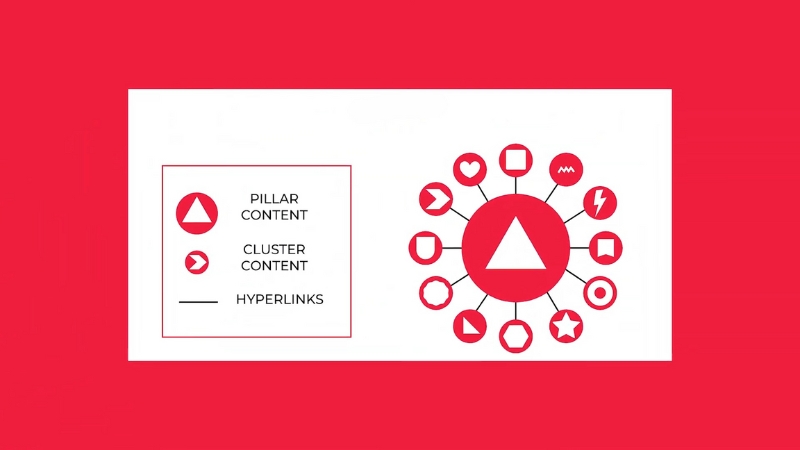
Cluster pages are designed to answer one narrow question or scenario completely. This precision is what allows them to rank for long-tail searches consistently.
Examples of long-tail cluster intents include:
Each of these deserves its own page.
Cluster page type
Example intent
Ranking benefit
Rule-specific
Whoo qualifies for X?”
High relevance
Location-based
“X rules by state”
Geographic long-tail
Time-based
“X changes in 2025”
Freshness signal
Exception-focused
When X does not apply.
Low competition
Cluster pages should always link back to the pillar and never compete with it for the same primary query.
Designing a Topic Cluster Before Writing
Clusters should be planned before drafting begins. Writing first and organizing later leads to overlap and cannibalization.
A structured planning phase answers four questions:
Question
Purpose
What is the core topic?
Defines the pillar
What questions repeat in SERPs?
Identifies clusters
Which queries overlap?
Prevents duplication
What must stay evergreen?
Determines update cadence
This process ensures each page has a unique ranking role.
Internal Linking Rules that Support Long-Tail Rankings
View this post on Instagram
Internal links are not decorative. In topic clusters, they are instructional signals for search engines.
Link direction
Best practice
Pillar → cluster
Link to all major subtopics
Cluster → pillar
Always link back clearly
Cluster → cluster
Only when contextually necessary
Random sitewide links
Avoid
Over-linking dilutes meaning. Under-linking hides structure. Balance creates clarity.
How Clusters Outperform Isolated Content Over Time
Topic clusters compound value. As new cluster pages are added, existing ones often gain impressions without being changed.
Time horizon
Isolated posts
Topic clusters
First 3 months
Faster initial ranking
Slightly slower
6–12 months
Plateau or decline
Growth phase
12+ months
Unstable
Compounding visibility
Clusters also reduce dependence on backlinks. Authority is reinforced internally rather than imported externally.
Updating Clusters to Protect Long-Tail Traffic
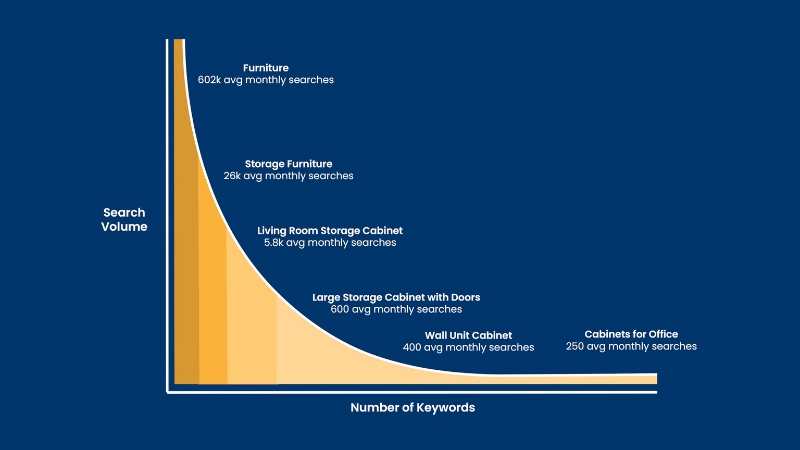
Long-tail queries evolve. Laws change. Thresholds move. Definitions tighten. Clusters make updates manageable.
Update target
Frequency
Impact
Pillar page
6–12 months
Sitewide relevance
Core cluster pages
6–18 months
Ranking stability
Edge case pages
As needed
Traffic preservation
Updating one cluster page can improve rankings across multiple related queries.
Common Cluster Failures that Block Rankings
Most failed clusters break down for structural reasons, not content quality.
Mistake
Consequence
Multiple pages answering the same question
Cannibalization
Thin or outdated pillar
Authority collapse
No pruning of old pages
Topical dilution
Over-optimized anchors
Reduced trust
Clusters require discipline. More pages are not always better.
Why Topic Clusters Are Mandatory in 2025
@avansta_marketing How Top Websites Dominate Google with Topic Clusters (Part 5 – Website Tips) Ever wonder how top-ranking websites seem to dominate Google search results? The secret isn’t just great content—it’s topic clusters. If you’re not using this powerful SEO strategy, you’re missing out on a huge opportunity to boost your rankings, drive traffic, and establish your authority. Here’s everything you need to know about topic clusters and how they work: Topic clusters are a way of organizing your website’s content around broad topics (called “pillar pages”) and related subtopics (called “cluster content”). Think of it like a hub-and-spoke model: Pillar Page: A comprehensive guide covering a broad topic (e.g., “Digital Marketing”). Cluster Content: Individual pieces of content that dive deeper into specific subtopics (e.g., “SEO Tips,” “Social Media Strategies,” “Email Marketing Best Practices”). By linking these pieces together, you create a network of content that’s easy for both users and search engines to navigate. How Do Topic Clusters Work? Topic clusters aren’t just about organizing content—they’re a game-changer for your SEO strategy. Here’s how they work: 1️⃣ Establish Authority When you create a pillar page and multiple cluster pieces, you’re showing Google that you’re an expert on a particular topic. The more in-depth and interconnected your content is, the more likely you are to rank higher in search results. 2️⃣ Improve Internal Linking Topic clusters rely heavily on internal linking. By linking your cluster content back to your pillar page (and vice versa), you: ▪️ Help search engines understand the relationship between your pages. ▪️ Guide users to more relevant content, keeping them on your site longer. ▪️ Boost the authority of your pillar page, making it more likely to rank. 3️⃣ Cover More Keywords With topic clusters, you’re not just targeting one keyword—you’re targeting a whole range of related keywords. For example, if your pillar page is about “Content Marketing,” your cluster content can target keywords like “blogging tips,” “content calendar tools,” and “how to write engaging headlines.” If you’re ready to take your website’s SEO to the next level, we’ve got you covered. Download our FREE e-book, link in the bio! #websites #seo #topicclusters #websitetraffic #websitetraffictips ♬ original sound – Avansta
Search engines now reward demonstrated understanding, not surface coverage. Topic clusters are the clearest way to show that understanding.
Long-tail rankings are no longer about obscure keywords. They are about answering real questions inside a visible, logical knowledge system.
Bottom Line
For blogging websites targeting long-tail rankings in 2025, the topic cluster strategy is not an optimization tactic. It is the core publishing framework.
Clusters align user intent, internal structure, and search engine evaluation into a single system. When built correctly, they reduce volatility, prevent content decay, and allow rankings to compound instead of reset.