
In 2025, E-E-A-T is no longer an abstract SEO concept.
Google evaluates blogs based on visible proof of real experience, demonstrable expertise, clear authorship, transparent sourcing, and consistent trust signals across the entire site.
Blogs that cannot prove who is writing, why they are qualified, and how their information is validated are systematically de-prioritized, regardless of keyword optimization.
What E-E-A-T Means in 2025, Not in Theory but in Practice
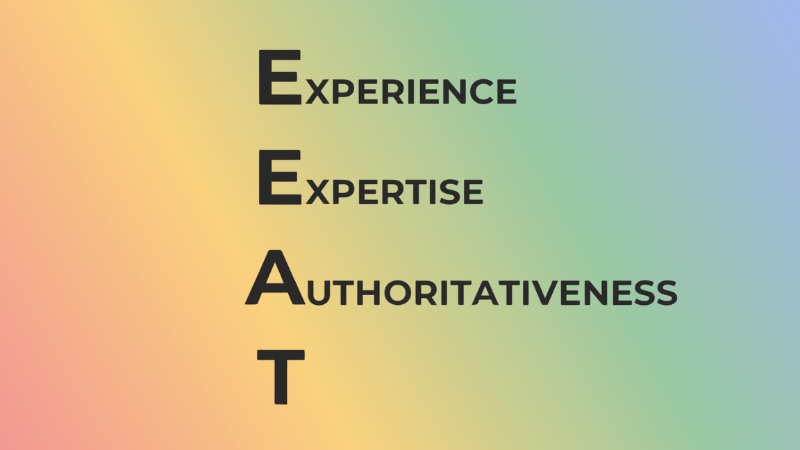
E-E-A-T stands for Experience, Expertise, Authoritativeness, and Trustworthiness. Google formally added “Experience” to its Search Quality Rater Guidelines in late 2022, and by 2024–2025, this change became operational rather than descriptive.
Large-scale ranking volatility across health, finance, legal, and informational blogs after the March 2024 and November 2024 core updates showed a clear pattern: sites with anonymous content, AI-generated summaries without lived context, or shallow author pages lost visibility.
Google does not score E-E-A-T as a single metric. Instead, it evaluates hundreds of signals that collectively answer four questions:
- Who wrote this?
- Why should anyone trust them?
- Is this information grounded in real-world experience or verifiable expertise?
- Does the site behave like a legitimate, accountable publisher?
Search Quality Raters are explicitly instructed to look for first-hand experience when topics imply lived interaction, such as product usage, medical conditions, legal processes, or location-specific knowledge.
This evaluation increasingly aligns with machine learning systems trained on known trustworthy patterns rather than isolated ranking factors.
Experience: The Most Misunderstood E in E-E-A-T

Experience does not mean opinions or storytelling. It means evidence of real interaction with the subject matter. In 2025, Google consistently favors content that demonstrates the author has actually used, done, observed, or worked within the topic being discussed.
For example, a review of a logistics workflow that mentions handling chargebacks, warehouse cut-off times, or carrier claims shows operational experience.
A generic explanation of “how logistics works” does not. Similarly, a health article that references managing symptoms over time, diagnostic pathways, or side effects reflects experience in a way a medical dictionary definition never can.
Experience signals are evaluated contextually. Google does not require experience in all content categories, but it expects it wherever experience would logically exist.
Experience Signals Google Actively Rewards
| Signal type | What Google looks for | Practical implementation |
| First-hand context | Evidence that the author interacted with the topic | Describing processes, outcomes, and limitations |
| Temporal depth | Knowledge accumulated over time | References to changes, updates, or longitudinal effects |
| Situational specificity | Details that cannot be copied easily | Location-based constraints, real costs, real timelines |
| Limitations acknowledged | Awareness of edge cases and failures | Explaining what does not work and why |
Experience is often visible in what is not said. Over-generalized content is increasingly treated as low value.
Expertise: Credentials Matter, but Context Matters More
View this post on Instagram
Expertise in 2025 is evaluated relative to the topic’s risk level. Google applies stricter standards to YMYL content (Your Money or Your Life), such as finance, health, safety, and legal guidance.
However, even non-YMYL blogs are expected to demonstrate subject competence.
Formal credentials help, but they are not mandatory. What matters is whether the author’s background logically supports their claims.
A nutrition article written by someone who has worked with dietary planning for years can demonstrate expertise without being a registered dietitian, provided the scope is appropriate, and sources are cited correctly.
Expertise Expectations by Content Type
| Content category | Expected expertise level | Evidence required |
| Medical, health | High | Professional background, citations, disclaimers |
| Finance, legal | High | Regulatory awareness, accurate terminology |
| Technical tutorials | Medium to high | Demonstrated implementation knowledge |
| Lifestyle, travel | Medium | First-hand experience, accurate local info |
| Opinion essays | Low to medium | Clear labeling as opinion |
Google increasingly penalizes blogs that overreach. Writing outside one’s expertise without boundaries or disclaimers is a trust liability.
Authoritativeness: Built Across the Web, Not on One Page
Authoritativeness is not self-declared. It emerges from external validation. In 2025, Google evaluates how often a site or author is referenced, cited, or linked by other credible sources within the same topical space.
This does not require national media coverage. Authority can be local, niche-specific, or industry-bounded. What matters is consistency.
A blog that is repeatedly referenced by forums, professional blogs, academic citations, or industry newsletters signals authority even if traffic volumes are modest.
Common Authority Signals Observed in 2025
| Signal | Why it matters |
| Contextual backlinks | Show recognition within the niche |
| Brand mentions | Indicate awareness beyond SEO links |
| Author search demand | People search for the author by name |
| Consistent topical focus | Reinforces expertise clustering |
Authority dilution is a growing issue. Blogs that publish across unrelated topics weaken topical authority and lose ranking stability.
Trustworthiness: The Baseline Requirement You Cannot Compensate For
Trustworthiness is non-negotiable. A site lacking basic trust infrastructure will not rank sustainably, regardless of content quality.
In 2025, trustworthiness is evaluated at both the page level and the site level. One misleading article can affect the perceived reliability of the entire domain.
Core Trust Signals Google Evaluates
| Area | Required elements |
| Transparency | Clear About, Contact, Editorial policies |
| Accuracy | Correct facts, up-to-date data |
| Citations | Primary sources, reputable institutions |
| Accountability | Named authors, update history |
| Technical trust | HTTPS, no deceptive UX |
Notably, Google raters are instructed to treat anonymous or unaccountable content as low trust by default.
Author Pages Are No Longer Optional
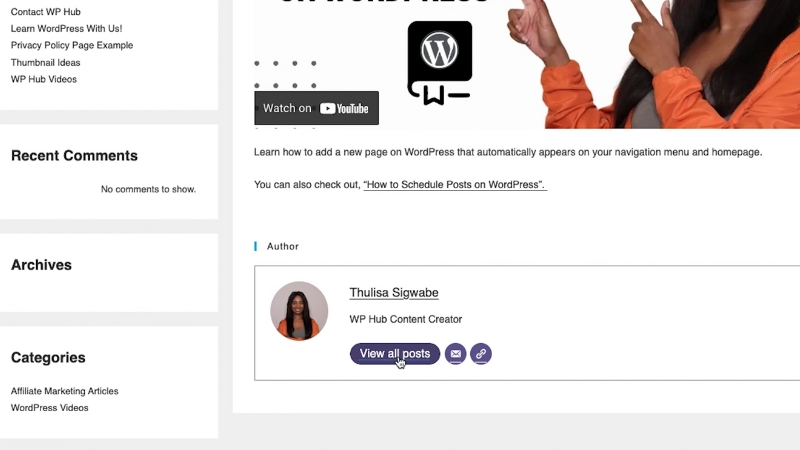
In 2025, a blog without real author pages is structurally incomplete. Author pages are not biographies for branding; they are verification documents.
A functional author page answers four questions:
- Who is this person?
- Why are they qualified to write this
- What is their experience with the topic?
- How can they be independently verified?
What an Effective Author Page Includes
| Component | Purpose |
| Real name and photo | Identity verification |
| Relevant background | Establishes expertise |
| Topic scope | Prevents overreach |
| External references | Confirms authority |
| Update history | Shows active involvement |
Generic author bios repeated across dozens of writers are increasingly ineffective.
Content Updates and Maintenance as a Trust Signal

Google evaluates whether content remains accurate over time. A blog that publishes and forgets is treated as less reliable than one that maintains its archive.
The 2024 Helpful Content system explicitly emphasized content freshness relative to topic volatility. Medical guidance, pricing data, laws, and platform policies must be reviewed regularly.
Recommended Update Cadence by Topic Type
| Topic type | Review frequency |
| Medical, legal | Every 3–6 months |
| Financial | Every 6–12 months |
| Technical platforms | After major updates |
| Evergreen concepts | Every 12–24 months |
Visible “last updated” dates improve trust only if the content is genuinely revised.
AI Content and E-E-A-T in 2025

Google does not penalize AI-assisted content by default. It penalizes unverifiable, unaccountable, and experience-free content. Most AI-generated blogs fail E-E-A-T because they lack lived context, original insight, and editorial responsibility.
AI can assist with structure, drafting, or summarization, but human oversight must add interpretation, judgment, and experience. Blogs that rely solely on AI without human validation increasingly experience traffic decay after core updates.
Measuring E-E-A-T Progress Internally
E-E-A-T cannot be tracked in Search Console as a metric, but progress can be measured indirectly.
Practical Internal Indicators
| Indicator | What it reflects |
| Ranking stability | Trust resilience |
| Fewer content drops after updates | Quality alignment |
| Increased branded searches | Authority growth |
| Higher average dwell time | Content credibility |
| Natural backlinks | External validation |
Sudden losses after updates often correlate with trust or experience gaps rather than technical SEO issues.
Final Perspective
@digitalnomadshq_ What is EEAT? The Secret to Google’s Trust Algorithm 🤫 Watch the full podcast on our YouTube channel now. #EEAT #SEO #DigitalMarketing #DigitalNomadsHQ #InsideTheAgency ♬ original sound – Digital Nomads HQ
E-E-A-T in 2025 is not about optimization tricks. It is about publishing content that behaves like it was written by a real person with real knowledge, real accountability, and real consequences for being wrong.
Blogs that treat trust as a structural requirement rather than a ranking tactic are the ones that remain visible after algorithm updates.
This shift favors smaller, focused publishers who know their subject deeply over large content farms producing generalized summaries. In practical terms, E-E-A-T has become less about what you say and more about whether Google can believe you should be saying it at all.