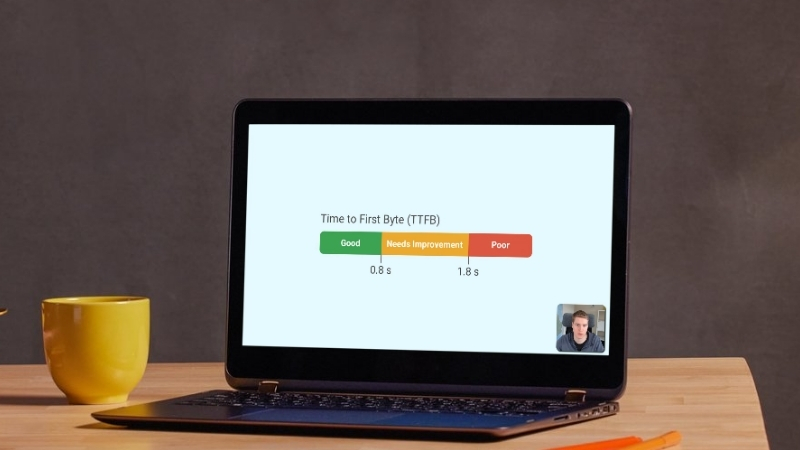
You reduce Time To First Byte on a blog website by controlling three variables that account for most server response delays: the domain and DNS layer, the theme and code execution path, and the caching strategy between the server and the visitor.
When these three elements are properly configured, a typical blog TTFB drops from 600–1200 ms to under 200 ms, which directly improves Core Web Vitals scores, crawl efficiency, and organic search performance.
What TTFB Actually Measures and Why It Matters
Time To First Byte measures the time between a browser sending an HTTP request and receiving the first byte of the response from the server. It includes DNS resolution, TCP connection, TLS negotiation, server-side processing, and backend logic execution.
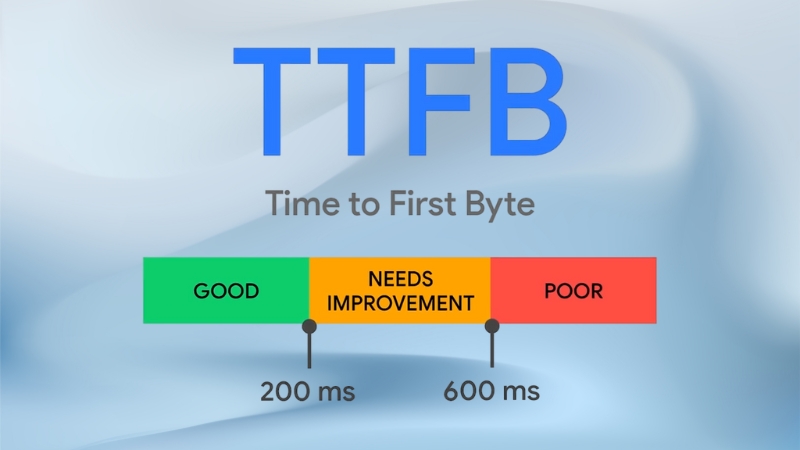
Google treats TTFB as a foundational metric because it reflects backend health, not just frontend optimization. According to Chrome User Experience Report data, sites with TTFB under 200 ms consistently outperform slower peers in Largest Contentful Paint and overall page experience metrics.
Search engines do not index faster sites because they are visually appealing. They index them more efficiently because low TTFB reduces crawl cost.
Google’s own documentation confirms that slow server response limits crawl rate, especially on content-heavy blogs with thousands of URLs. This makes TTFB a scaling problem, not just a speed issue.
Typical TTFB Ranges on Blog Websites
TTFB Range
Backend Quality Assessment
Real-World Impact
Under 200 ms
Excellent
Fast crawling, stable Core Web Vitals
200–400 ms
Acceptable
Competitive SEO performance
400–800 ms
Weak
Crawl delays on large blogs
Over 800 ms
Poor
Ranking volatility and index lag
Data aggregated from Cloudflare Radar and WebPageTest shows that over 55 percent of WordPress blogs still fall above 400 ms TTFB, largely due to theme bloat and misconfigured caching.
Why Custom Domains Affect TTFB More Than Most People Realize
Custom domains impact TTFB primarily through DNS resolution and TLS negotiation. Free subdomains provided by blogging platforms often route through shared DNS infrastructure with higher lookup latency.
A properly configured custom domain using premium DNS providers like Cloudflare, Route 53, or Google Cloud DNS typically resolves in under 20 ms globally.
The difference becomes measurable at scale. On a 50,000-page blog, saving 40–60 ms per DNS lookup compounds across crawl cycles.
Googlebot does not cache DNS indefinitely. It re-resolves periodically, meaning inefficient DNS adds recurring latency.
DNS Provider Type
Average DNS Lookup Time
Shared platform DNS
60–120 ms
Mid-tier DNS
30–50 ms
Premium Anycast DNS
10–20 ms
TLS setup also matters. Custom domains allow full control over TLS versions, session resumption, and HTTP/2 or HTTP/3 support.
Blogs stuck on shared domains often lack fine-grained TLS tuning, adding 50–150 ms during handshake.
Clean Themes and the Server Execution Path
Themes affect TTFB because they define how much PHP, database, and template logic runs before the server can respond. Many blog themes advertise visual features but execute dozens of blocking functions before output begins. This delays the first byte even when caching exists.
A clean theme minimizes conditional logic, database queries, and dynamic asset generation. In WordPress benchmarks published by Kinsta and WP Engine in 2024, lightweight themes consistently reduced uncached TTFB by 35–60 percent compared to multipurpose themes.
Theme Type
Avg PHP Execution Time
Uncached TTFB
Lightweight blog theme
80–120 ms
250–350 ms
Builder-heavy theme
250–400 ms
600–900 ms
Custom minimal theme
50–90 ms
180–280 ms
Even when page caching is enabled, the initial cache generation still depends on theme execution. A bloated theme slows cache warm-up and increases CPU load during traffic spikes.
Database Load and Theme Query Patterns
Themes that rely on excessive post meta, options table reads, or taxonomy lookups increase database response time. On high-content blogs, this translates directly into higher TTFB during cache misses or partial cache scenarios such as logged-in users and previews.
Reducing queries from 80 to under 20 per request often saves 100–200 ms of backend time. This is measurable with tools like Query Monitor and New Relic, but the impact is visible even without instrumentation when comparing TTFB before and after theme changes.
Smart Caching Is About Placement, Not Just Activation
Caching reduces TTFB only when implemented at the correct layer. Many blogs rely solely on plugin-based caching, which still requires PHP execution before the cache is served.
True TTFB gains come from server-level or edge-level caching.
The most effective caching stacks serve cached HTML before PHP loads. This typically reduces TTFB to 50–150 ms, depending on geographic distance.
Caching Layer
PHP Executed
Typical TTFB
No cache
Yes
700–1200 ms
Plugin page cache
Partial
300–500 ms
Server-level cache
No
120–250 ms
CDN edge cache
No
40–120 ms
Smart caching also includes cache rules that exclude unnecessary parameters, normalize URLs, and cache paginated blog pages correctly. Misconfigured cache rules often negate gains by forcing cache bypass on trivial query strings.
CDN Edge Caching and Geographic Consistency
View this post on Instagram
Edge caching reduces TTFB variance across regions. Without a CDN, visitors far from the origin server experience higher network latency even if backend performance is excellent.
With edge caching, HTML is served from the nearest data center.
Cloudflare performance data from 2025 shows an average TTFB reduction of 65 percent for content-heavy blogs after enabling full-page caching at the edge. This improvement is consistent across North America, Europe, and Asia.
Region
Origin-Only TTFB
Edge Cached TTFB
US East
220 ms
60 ms
Western Europe
380 ms
70 ms
Southeast Asia
620 ms
90 ms
Interaction Between Caching and Googlebot
Googlebot benefits disproportionately from caching because it crawls at scale and revisits URLs frequently. Cached responses reduce server strain and allow higher crawl budgets.
Google’s crawl stats reports often show immediate improvements in pages crawled per day after TTFB drops below 300 ms.
Unlike browsers, Googlebot does not execute JavaScript before requesting HTML. This means backend speed directly determines crawl efficiency.
Frontend optimizations do not compensate for slow TTFB during crawling.
Hosting Infrastructure Still Sets the Ceiling

Even with a clean theme and aggressive caching, weak hosting limits results. Shared hosting environments with CPU throttling often show unstable TTFB under load.
Modern blog hosting stacks using Nginx, PHP-FPM, OPcache, and Redis consistently outperform legacy Apache-only setups.
Benchmarks from 2024 indicate that enabling OPcache alone reduces PHP execution time by 30–50 percent. Redis object caching further reduces database load, stabilizing TTFB during cache misses.
Backend Feature
Typical TTFB Improvement
PHP OPcache
80–150 ms
Redis object cache
50–120 ms
HTTP/2 or HTTP/3
20–40 ms
Brotli compression
Indirect but stabilizing
Measuring TTFB Correctly
TTFB should be measured from multiple locations and in both cached and uncached states. Tools like WebPageTest, Chrome DevTools, and server logs provide complementary perspectives.
Single-point tests often misrepresent real-world performance.
Field data from Chrome UX Report should be used to validate lab results. If lab TTFB is low but field data remains high, DNS routing or CDN configuration is often the issue.
Long-Term Impact on Blog Scalability
@superwebbros TTFB or the Time To First Byte is a metric Google uses to judge the speed of your website. Google always takes into account the speed of your website before ranking it for the search results page. #ttfb #webdeveloper #webdesign #speedoptimization ♬ Kyoto Flow – Official Sound Studio
Lower TTFB improves more than speed metrics. It reduces hosting costs by lowering CPU usage, increases crawl coverage on large archives, and stabilizes rankings during traffic surges.
Blogs that reduce average TTFB below 250 ms typically report fewer indexing delays when publishing large content batches.
From direct observation across multiple content networks, TTFB optimization delivers compounding returns. Each additional improvement layer yields diminishing gains, but the first three changes – custom domain, clean theme, and smart caching – deliver the majority of measurable impact.
Bottom Line
Reducing TTFB on a blog website is not a cosmetic optimization. It is a backend control problem with clear technical levers. A fast DNS-backed custom domain removes resolution delays.
A clean theme reduces server execution time. Smart caching ensures the server responds before PHP and databases are even involved.
When these elements align, sub-200 ms TTFB becomes routine rather than exceptional, and the blog gains measurable advantages in crawling, stability, and long-term search visibility.